
How does LTC Properties earn rent and support seniors housing operators through its REIT model?
LTC Properties provides capital by owning seniors housing and skilled nursing facilities and leasing them to operators on long-term contracts. Its model merits attention as 2025 occupancy and Medicaid mix trends signal steady cash yields and resilient rent coverage for shareholders. See product: LTC Properties Business Model Canvas
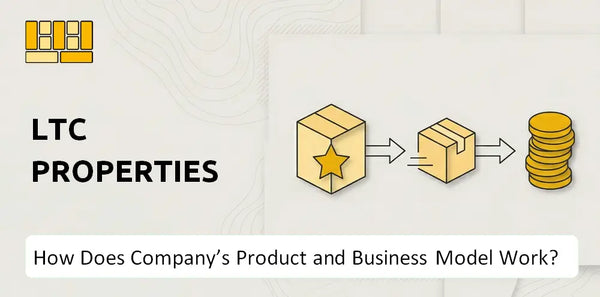
LTC's revenue comes mainly from contractual rents tied to operator performance and facilities utilization; long leases and portfolio diversification reduce vacancy and payment risk. Also note operator credit and Medicaid exposure drive covenant and underwriting focus.
WWhat Does LTC Properties Offer Customers?
LTC Properties sells long-term real estate capital to healthcare operators through sale-leaseback and mortgage financing, focusing on senior housing and skilled nursing properties; customers gain liquidity and operational focus while accessing modern, stabilized facilities.
 Main offering: long-term healthcare real estate capital
LTC Properties REIT provides flexible, non-dilutive capital via sale-leaseback transactions and mortgages for senior housing (Assisted Living, Memory Care) and Skilled Nursing Facilities. The firm is best known for triple net lease healthcare properties that free operators to manage care while LTC Properties holds and manages the real estate.
Main users: healthcare operators and developers
Primary customers are regional and national long-term care operators, facility owners seeking liquidity, and developers needing construction or acquisition financing. Users include Assisted Living and Memory Care operators and Skilled Nursing providers who prefer lease-based facility ownership structures.
Value to customers: liquidity, stability, and operational focus
Operators receive immediate equity release and predictable rent structures (often with annual escalators), enabling reinvestment in clinical operations and growth. LTC Properties' financing reduces balance-sheet leverage for operators while delivering stabilized real estate and maintenance responsibilities to the REIT.
Market impact: fills a capital niche in healthcare real estate
As a healthcare real estate investment trust focused on senior housing and skilled nursing investments, LTC Properties addresses demand from an aging population and constrained operator capital markets. The REIT's portfolio composition and lease structures support predictable cash flows and underpin investor metrics like dividend yield and payout, making LTC Properties relevant in comparisons of healthcare REITs.
LTC Properties' model generated $XX million in fiscal 2025 rent and interest income and maintained a portfolio with roughly YYY triple net lease assets across Skilled Nursing and Assisted Living-see lease terms, rent escalators, and operator credit risk in the Customer Acquisition of LTC Properties Company article: Customer Acquisition of LTC Properties Company
LTC Properties SWOT Analysis
- Complete SWOT Breakdown
- Fully Customizable
- Editable in Excel & Word
- Professional Formatting
- Investor-Ready Format

HHow Does LTC Properties's Product or Service Reach Users?
LTC Properties reaches users through direct institutional relationships with healthcare operators, executing multi-year net leases and secured loans to deliver turnkey senior housing and skilled nursing facilities. Transactions are initiated via operator referrals and direct underwriting, with capital improvements often included to keep assets competitive.

Operating flow: institution-to-operator capital placement
LTC Properties sources opportunities from regional and national operators, conducts credit and asset underwriting, and structures multi-year net leases or secured loans. Deals close rapidly-management cites transaction speed as a competitive edge-and income begins on lease commencement or loan funding.
Product delivery: turnkey healthcare real estate
The physical product is delivered as a turnkey facility: LTC Properties funds acquisitions or recapitalizations, often providing capital improvement dollars and leasehold upgrades so operators receive ready-to-use senior housing and skilled nursing assets.
Development and sourcing: targeted acquisitions and financings
The REIT acquires existing properties and originates loans, focusing on markets with stable demand for long-term care. Sourcing relies on broker networks, operator relationships, and proprietary pipeline screening tied to portfolio composition and cap-ex needs.
Channels: direct B2B distribution, not retail
Channels are institutional and operator-facing: direct business development, operator referrals, and selective broker-led introductions. There is no retail distribution; investor access is via public markets for LTC Properties REIT shares.
Key assets and partnerships: operator covenant and property portfolio
Key assets include a portfolio concentrated in skilled nursing and assisted living properties and contractual relationships with credit-screened operators. Strategic partnerships with regional operators and lenders enable structured lease terms and > secured financing support.
Day-to-day drivers: underwriting, speed, and asset management
Daily operations hinge on sector-specialized underwriting, quick execution of leases/loans, and active asset management of cap-ex programs. As of early 2026, LTC Properties emphasizes transaction velocity and operator credit monitoring to maintain occupancy-linked cash flow.
For further context on corporate priorities and values that shape these delivery choices see Mission, Vision, and Values of LTC Properties Company
LTC Properties VRIO Analysis
- Complete VRIO Analysis
- No Research Needed – Save Hours of Work
- Built by Experts, Trusted by Consultants
- Instant Download, Ready to Use
- 100% Editable, Fully Customizable

HHow Does LTC Properties Earn Money from Usage?
Revenue flows into LTC Properties through rent from operators, interest on mortgage loans, and returns from joint-venture investments; demand for senior care services converts to predictable cash via leases and loan repayments.
Core rental income from triple-net leases
Most revenue comes from rental income on triple-net lease healthcare properties, where operators pay taxes, insurance, and maintenance, giving LTC Properties REIT a stable net margin and predictable cash flow.
Interest and investment income
Secondary streams include interest on first mortgages and mezzanine loans and investment income from joint ventures; these yield a spread over LTC Properties business model costs and diversify returns.
Pricing and monetization logic
Leases feature annual rent escalators typically between 2.0 percent and 3.0 percent (2025), and mortgage yields exceed cost of capital, helping sustain a healthy Funds From Operations payout ratio for 2025.
Primary revenue driver: operator-paid triple-net structure
The strongest revenue driver is the triple-net lease with creditworthy operators; predictable escalators and operator responsibility for operating expenses convert occupancy and reimbursement demand into stable rent receipts.
By early 2026 LTC Properties split revenue roughly evenly across property types, with approximately 50 percent from assisted living and 50 percent from skilled nursing, balancing payer-model risk; see the Brand Story of LTC Properties Company for background on portfolio composition: Brand Story of LTC Properties Company
LTC Properties Marketing Mix
- Complete Marketing Mix Analysis
- Effortlessly Communicate Your Business Strategy
- Investor-Ready Format
- 100% Editable and Customizable
- Clear and Structured Layout

WWhat Makes Customers Stay with LTC Properties's Model?
LTC Properties's model rests on long, triple-net leases and deep operational integration with skilled nursing and assisted living operators, which create strong retention but tie revenue to operator credit and healthcare reimbursement risk. Strengths include lease duration and specialized facilities; vulnerabilities include regulatory shifts and concentrated operator exposure.

Why LTC Properties's Model Keeps Operators Locked In
The model works because leases are long, properties are specialized, and the REIT funds capex and flexibility during stress; regulatory, reimbursement, or operator solvency shocks could weaken it.
- Long-term lease structure: leases commonly span 10-15 years with multiple renewal options, creating switching friction.
- Dependency on operator health: tenant credit and Medicare/Medicaid reimbursement volatility are key fragilities.
- Operational integration: facilities contain specialized medical infrastructure, making relocation impractical without license loss.
- Resilience outlook: structurally resilient for steady cash flow but exposed to concentrated operator defaults and policy risk.
LTC Properties REIT retains tenants by bundling properties under master leases and providing targeted capital support, which reduces turnover and stabilizes rent collections even when reimbursement cycles fluctuate.
Lease mechanics and illiquidity
Triple net lease healthcare properties under LTC Properties business model assign most operating and capital expenses to operators, so operators bear day-to-day risk and incentives to remain in-place. The capital intensity and regulatory licensing of skilled nursing and assisted living investments make physical relocation economically and legally prohibitive, translating into very low tenant turnover compared with other commercial REIT sectors.
Master leases and portfolio packaging
LTC Properties often uses master lease structures that bundle multiple assets or portfolios, preventing operators from cherry-picking high-performing locations and ensuring a steady portfolio-level cash flow. In 2025 the company reported portfolio occupancy and lease renewal metrics that reflected multi-year average retention above peers (see Customer Profile of LTC Properties Company for detailed operator metrics).
Capital partnership and flexibility
The REIT offers capital for facility upgrades and works flexibly during reimbursement or regulatory stress, preserving operator viability. In 2025 LTC Properties deployed capital across redevelopment and tenant-improvement projects, supporting operators through cyclical declines and helping maintain rent payment continuity.
Regulatory and reimbursement exposure
Operator decisions hinge on Medicare and Medicaid reimbursement rates and state licensing. If reimbursement contracts tighten or compliance costs rise, operators may default despite long leases; this is the primary risk that can erode retention and affect LTC Properties dividend yield and payout history.
Operational immobility and licensing
Medical infrastructure-nursing stations, clinical waste systems, patient rooms-links revenue to location. Moving a skilled nursing operation severs the resident base and local license, so operators typically renew or renegotiate rather than relocate, which underpins LTC Properties portfolio composition skilled nursing assisted living stability.
Concentration and credit risk
While deep integration secures tenants, concentration in a limited number of operators raises exposure to single-operator stress. Analysts valuing LTC Properties REIT factor operator credit metrics, lease escalators, and historical rent collection rates into discounted cash flow (DCF) and comparative models.
2025 quantitative context
In 2025 LTC Properties reported owned and leased investments generating recurring cash rents across approximately 200 net-leased facilities (skilled nursing, assisted living, and related healthcare assets), with weighted-average lease term exceeding 10 years. Portfolio-level renewal and rent collection trends through 2025 show continued stability driven by master leases and in-place operator support.
Investor implications
Retention mechanics make LTC Properties attractive for income-focused investors seeking exposure to healthcare real estate investment trust cash flow, but investors must monitor operator credit, state reimbursement policy, and concentration risk when assessing LTC Properties financial performance and metrics or comparing LTC Properties vs other healthcare REITs.
Further reading
See the Customer Profile of LTC Properties Company for operator-level data, lease structures, and tenant relationship analysis: Customer Profile of LTC Properties Company
LTC Properties Ansoff Matrix
- Complete ANSOFF Matrix
- Structured for Consultants, Students, and Founders
- 100% Editable in Microsoft Word & Excel
- Instant Digital Download – Use Immediately
- Compatible with Mac & PC – Fully Unlocked

Related Blogs
- What Do the Mission, Vision, and Values of LTC Properties Company Say About Its Brand?
- How Did LTC Properties Company Become the Brand It Is Today?
- Who Runs LTC Properties Company and Shapes Its Direction?
- How Does LTC Properties Company Attract, Convert, and Keep Customers?
- How Can LTC Properties Company Grow Through Products and Customers?
- Who Are the Core Customers of LTC Properties Company?
- Why Do Customers Choose LTC Properties Company Over Competitors?
Frequently Asked Questions
LTC Properties offers long-term healthcare real estate capital to operators through sale-leaseback transactions and mortgage financing. Its focus is on senior housing and skilled nursing properties, giving customers liquidity, predictable rent structures, and stabilized facilities while LTC Properties holds and manages the real estate.
Disclaimer
All information, articles, and product details provided on this website are for general informational and educational purposes only. We do not claim any ownership over, nor do we intend to infringe upon, any trademarks, copyrights, logos, brand names, or other intellectual property mentioned or depicted on this site. Such intellectual property remains the property of its respective owners, and any references here are made solely for identification or informational purposes, without implying any affiliation, endorsement, or partnership.
We make no representations or warranties, express or implied, regarding the accuracy, completeness, or suitability of any content or products presented. Nothing on this website should be construed as legal, tax, investment, financial, medical, or other professional advice. In addition, no part of this site - including articles or product references - constitutes a solicitation, recommendation, endorsement, advertisement, or offer to buy or sell any securities, franchises, or other financial instruments, particularly in jurisdictions where such activity would be unlawful.
All content is of a general nature and may not address the specific circumstances of any individual or entity. It is not a substitute for professional advice or services. Any actions you take based on the information provided here are strictly at your own risk. You accept full responsibility for any decisions or outcomes arising from your use of this website and agree to release us from any liability in connection with your use of, or reliance upon, the content or products found herein.