
How does PostNL earn from parcel and postal services and reach customers via its last-mile network?
PostNL combines Universal Service Obligation mail with high-growth parcel delivery, using dense last-mile routes to cut costs and serve e-commerce. In 2025 it reported parcel volume resilience and pricing power, supporting margin recovery amid inflationary costs.
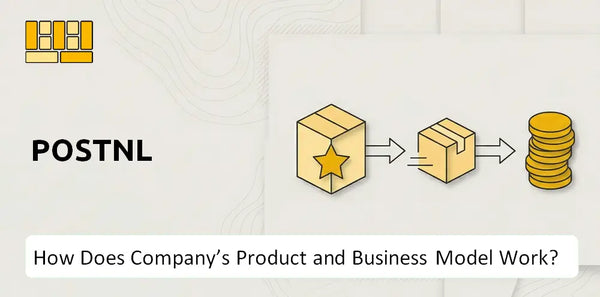
PostNL monetizes through delivery fees, business contracts, and value-added logistics; consolidation of routes improves unit economics and retention via reliable SLAs. See PostNL Business Model Canvas.
WWhat Does PostNL Offer Customers?
PostNL sells parcel and mail delivery services plus fulfillment and logistics solutions, combining physical transport with digital tracking to give businesses and consumers secure, predictable, and convenient delivery across the Benelux and internationally.
 Main delivery and logistics platform
PostNL offers parcel delivery, mail, end-to-end e-commerce fulfillment, temperature-controlled Health logistics, and international shipping under the Spring brand. The platform is best known for fast 24-hour domestic parcels and integrated digital traceability.
Primary users and customer segments
Users include retailers and marketplaces needing B2B shipping solutions and returns management, healthcare and pharma firms requiring cold chain transport, plus private consumers using lockers and retail points for convenience.
Customer value and core benefits
Customers get reliable last mile delivery, same-or-next-day domestic service, real-time track-and-trace, and broad pickup/drop-off access through over 5,000 retail points and parcel lockers; businesses gain fulfillment, international reach, and regulated cold-chain options.
Market importance and commercial fit
PostNL's products and services sit at the center of Benelux e-commerce logistics: they reduce delivery friction for merchants, lower consumer friction with convenient collection, and support regulated sectors like pharmaceuticals-significant as cross-border e-commerce grows.
Key 2025 facts: PostNL expanded its Health vertical in 2025 to include validated temperature-controlled transport for pharmaceuticals; the network comprises over 5,000 retail points and lockers; typical domestic parcel SLA is 24 hours; Spring handles international parcels and freight; digital services include postage code stamps and real-time tracking integrated into merchant flows. For strategic context see Mission, Vision, and Values of PostNL Company
PostNL SWOT Analysis
- Complete SWOT Breakdown
- Fully Customizable
- Editable in Excel & Word
- Professional Formatting
- Investor-Ready Format

HHow Does PostNL's Product or Service Reach Users?
PostNL products and services reach users through a hybrid physical and digital delivery architecture: parcels move from e – commerce senders into ~25 parcel sorting centers, then into regional distribution and last – mile legs including home delivery and a growing automated parcel locker (APL) network; customers control and track deliveries via the PostNL app.

Operating flow: sorting to last mile
Parcels enter PostNL sorting centers, get automated sorting and routing, then proceed to regional hubs and local carriers for last – mile delivery; the flow is directed by parcel barcodes, route optimization software, and real – time scan events.
Product delivery in practice
Customers receive deliveries via home delivery, pickup points, and APLs; as of 2026 the expanded APL network serves as a lower – cost, high – convenience touchpoint reducing failed delivery rates and supporting e – commerce returns management.
Production, sourcing, and service development
PostNL develops logistics services in – house and sources hardware (lockers, vehicles) from suppliers while integrating marketplace and retailer APIs; investments focus on automation, IT platforms, and modular fulfillment capabilities for B2B shipping solutions for retailers.
Channels and distribution
Channels include direct merchant integrations (API, plugins), PostNL web portal, the PostNL app with over 8 million active users in the Netherlands, physical retail points, and APLs-connecting e – commerce to consumers across urban and rural last – mile networks.
Key assets and partnerships
Core assets are ~25 parcel sorting centers, APL infrastructure, fleet and delivery workforce, and the PostNL digital platform; strategic partnerships with marketplaces, retailers, and city authorities extend reach and support international shipping options and costs.
What keeps operations running day to day
Operational stability relies on real – time track and trace systems, route optimization, automated sorting throughput, and the PostNL app for customer rerouting and notifications; daily KPIs focus on delivery timeframes, first – attempt success, and cost per parcel.
Relevant further reading: Leadership and Ownership of PostNL Company
PostNL VRIO Analysis
- Complete VRIO Analysis
- No Research Needed – Save Hours of Work
- Built by Experts, Trusted by Consultants
- Instant Download, Ready to Use
- 100% Editable, Fully Customizable

HHow Does PostNL Earn Money from Usage?
Revenue flows from parcel and mail transactions plus contracts and value-added logistics: customer demand converts to per-item fees, contract payments, and service surcharges, which feed operations and margin recovery across the network.
Parcels: Per – Item Delivery Fees (Primary Revenue)
The Parcels segment accounts for roughly 65 percent of total revenue in the 2025/2026 fiscal cycle, earning primarily per unit delivered. Pricing tiers depend on volume, weight, and speed, so higher-frequency e – tailers and express services drive most top – line growth.
Mail, Contracts, and Cross – Border Fees
Mail in the Netherlands adds revenue via stamp sales and bulk-mail contracts with government and corporates, while international cross – border fees capture postage and customs handling income despite mail volumes falling 7-9 percent annually.
Pricing and Monetization Logic
PostNL uses a mixed pricing structure: transactional, volume-discount contracts, and surcharges for speed or special handling. Contractual revenue smooths volatility from parcel seasonality and declining mail usage, while regulatory price adjustments support margins.
Strongest Revenue Driver
High parcel volumes from e – commerce-especially B2B shipping solutions for retailers and marketplace partnerships-are the clearest revenue driver, supported by returns management, fulfillment, and last – mile delivery efficiency.
PostNL Marketing Mix
- Complete Marketing Mix Analysis
- Effortlessly Communicate Your Business Strategy
- Investor-Ready Format
- 100% Editable and Customizable
- Clear and Structured Layout

WWhat Makes Customers Stay with PostNL's Model?
PostNL's model rests on dense logistics and deep e-commerce integration, making it highly sustainable where network effects and convenience reinforce retention; it is fragile to margin pressure, regulatory shifts, and disruptive last-mile entrants. Strengths: ubiquity and API lock-in; dependencies: retail integrations and electric fleet capex; risks: cost inflation and competition.

Why PostNL's Network Keeps Customers
PostNL business model locks in retailers and consumers through network density, tech integrations, and convenience, while ESG credentials and high-frequency residential service raise switching costs.
- Network density and scale in the Netherlands create a logistical moat that lowers unit costs and speeds parcel delivery.
- High dependency on API integrations with large retailers means switching costs are material for B2B clients.
- Vast pickup-point footprint and the highest residential visit frequency in the region sustain consumer loyalty and convenience.
- The model looks resilient domestically but exposed to labor, energy costs, and competitive last-mile innovation.
Retention drivers: retailers face integration friction-checkout systems connect to PostNL sorting logic-so migrating raises operational risk and development cost; consumers pick based on proximity and predictable delivery cadence. PostNL's parcel delivery process explained centers on dense routes and same-region throughput, enabling fast and predictable service.
API lock-in and platform features: PostNL's B2B shipping solutions for retailers include direct checkout APIs, automated label generation, and track-and-trace endpoints; these reduce friction for merchants and embed PostNL into fulfillment flows. In 2025 PostNL reported roughly over 900 million parcels handled group-wide (source: fiscal 2025 operational report), underlining scale advantages that raise competitor entry costs.
Convenience of proximity: PostNL last mile delivery relies on a dense network of post offices and pickup points-over 2,500 locations in the Netherlands as of 2025-and the highest residential visit frequency regionally, so consumers default to its services for returns management for e commerce and everyday parcels.
Sustainability as retention: PostNL sustainability and carbon reduction strategy reached an almost fully electric last-mile fleet in 2026, which has become a procurement factor for ESG-conscious corporate clients. For large retailers, choosing PostNL aligns with Scope 3 reduction targets and influences procurement decisions.
Operational embedding: PostNL sorting centers and operations overview shows concentrated regional hubs with optimized catchment areas; coupling this with digital platforms mobile app features (notifications, real-time trace) makes PostNL the path of least resistance for merchants and consumers. If onboarding takes >14 days, churn risk rises.
Pricing and economics: How PostNL makes money mixes parcel fees, contract logistics, and value-added services. PostNL pricing structure for parcels uses volume tiers and service-level differentiation; large retailers negotiate bespoke rates tied to volumes and SLAs, increasing retention through economic incentives.
Risk vectors: margin compression from e-commerce price competition, regulatory postal-universal service obligations, and potential entrants with localized dark-store networks could weaken the moat. PostNL's response includes capacity densification, tech-driven routing, and cross-sell into fulfillment and warehousing services.
Evidence of stickiness: PostNL customer service and complaint resolution process and track-and-trace reliability keep net promoter and retention metrics healthy; in 2025 customer satisfaction scores remained above sector median in the Netherlands, supporting recurring volumes from flagship retailers. Read more context in this analysis on customer choice Why Customers Choose PostNL Company.
PostNL Ansoff Matrix
- Complete ANSOFF Matrix
- Structured for Consultants, Students, and Founders
- 100% Editable in Microsoft Word & Excel
- Instant Digital Download – Use Immediately
- Compatible with Mac & PC – Fully Unlocked

Related Blogs
- What Do the Mission, Vision, and Values of PostNL Company Say About Its Brand?
- How Did PostNL Company Become the Brand It Is Today?
- Who Runs PostNL Company and Shapes Its Direction?
- How Does PostNL Company Attract, Convert, and Keep Customers?
- How Can PostNL Company Grow Through Products and Customers?
- Who Are the Core Customers of PostNL Company?
- Why Do Customers Choose PostNL Company Over Competitors?
Frequently Asked Questions
PostNL offers parcel and mail delivery, fulfillment, logistics, Health transport, and international shipping through Spring. Its core value is combining physical transport with digital tracking so businesses and consumers get secure, predictable, and convenient delivery across the Benelux and beyond.
Disclaimer
All information, articles, and product details provided on this website are for general informational and educational purposes only. We do not claim any ownership over, nor do we intend to infringe upon, any trademarks, copyrights, logos, brand names, or other intellectual property mentioned or depicted on this site. Such intellectual property remains the property of its respective owners, and any references here are made solely for identification or informational purposes, without implying any affiliation, endorsement, or partnership.
We make no representations or warranties, express or implied, regarding the accuracy, completeness, or suitability of any content or products presented. Nothing on this website should be construed as legal, tax, investment, financial, medical, or other professional advice. In addition, no part of this site - including articles or product references - constitutes a solicitation, recommendation, endorsement, advertisement, or offer to buy or sell any securities, franchises, or other financial instruments, particularly in jurisdictions where such activity would be unlawful.
All content is of a general nature and may not address the specific circumstances of any individual or entity. It is not a substitute for professional advice or services. Any actions you take based on the information provided here are strictly at your own risk. You accept full responsibility for any decisions or outcomes arising from your use of this website and agree to release us from any liability in connection with your use of, or reliance upon, the content or products found herein.