
How does Regis Corporation turn salon brands like Supercuts into recurring franchise revenue?
Regis Corporation franchises hair salons, monetizing brand fees, product sales, and tech services while outsourcing day-to-day ops to franchisees. The asset-light model cut capital spending and lifted margins; in 2025 Regis reported growing franchise royalties and steady same-store unit metrics.
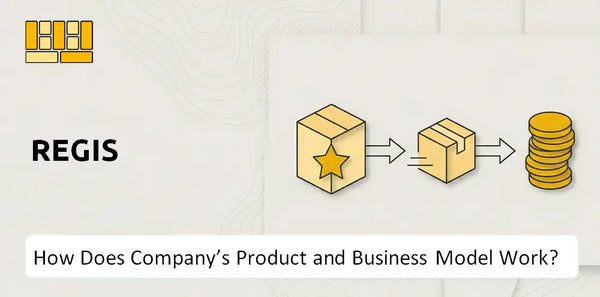
Regis earns via royalties, supply sales, and digital tools that improve franchise retention and drive repeat visits. See the Regis Business Model Canvas for the operating blueprint.
WWhat Does Regis Offer Customers?
Regis Corporation sells salon haircare services and professional retail products across multiple brands and retail formats, delivering affordable grooming, color, and scalp treatments plus salon-grade shampoos, conditioners, and styling tools to diverse customer segments.
 Tiered salon services and retail product lines
Regis Company business model centers on a tiered ecosystem: high-volume value cuts via Supercuts, big-box convenience through SmartStyle in Walmart, and premiumized services at First Choice Haircutters and Roosters Men's Grooming Center. The product model combines proprietary service techniques, advanced color and scalp-health treatments, and curated professional retail products.
Main customer segments
Who uses it: value-focused, time-constrained consumers (Supercuts), Walmart shoppers seeking one-stop convenience (SmartStyle), and customers seeking specialty color and scalp services at affordable-luxury price points (First Choice, Roosters). Franchisees and retail partners also rely on Regis for supply and brand support.
Customer value and outcomes
Value customers get: fast, standardized haircuts via the proprietary Haircut Technique; convenient in-store salons inside Walmart; expanded offerings in 2025 such as personalized scalp-health treatments and advanced color services; and access to professional-grade retail products. These deliver consistent quality, lower price points, and upsell opportunities through product sales.
Commercial significance in the salon market
Why it matters: Regis addresses segments within the $48 billion North American salon market by scaling across formats and revenue streams-service fees, retail product sales, and franchise royalties. The model supports franchise growth, vendor partnerships for private-label products, and digital salon management tools that improve unit economics and drive same-store sales.
For details on customer growth and acquisition channels, see Customer Acquisition of Regis Company
Regis SWOT Analysis
- Complete SWOT Breakdown
- Fully Customizable
- Editable in Excel & Word
- Professional Formatting
- Investor-Ready Format

HHow Does Regis's Product or Service Reach Users?
Regis Company delivers salon services through a hybrid model: walk-in retail locations in high-visibility corridors and retail partners plus a cloud-enabled digital booking and loyalty front end that drives most appointments.

Operating flow: in-store service with a digital front door
Customers find a nearby salon or retail partner, book via mobile or onsite, arrive for a staffed service, and pay in-store or through the app. The flow links scheduling, point-of-sale, and loyalty to a single customer record for repeat visits.
Product or service delivery: appointment-first, walk-in-ready
Services reach users through scheduled appointments or walk-ins at over 1,400 locations and embedded kiosks inside key retailers. Real-time wait tracking and mobile check-in reduce friction for frequent haircut purchases.
Production, sourcing, or development: centralized vendor partnerships
Regis Company sources salon products through preferred vendor agreements and centralized procurement to standardize product lines and pricing. Training and service protocols are developed centrally and rolled out to corporate and franchise salons.
Channels or distribution: retail footprint plus digital channels
Primary channels are company-operated salons, franchise locations, and strategic retail partners such as Walmart. Digital channels-mobile app and web booking via Zenoti-accounted for over 65% of appointments by early 2026.
Key assets or partnerships: Zenoti and retail alliances
Core assets include the Regis Company brand portfolio, salon real estate, the Zenoti cloud-based platform for scheduling/POS/loyalty, and partnerships with Walmart and major product vendors that supply salon retail inventory.
What makes it work day to day: staff, tech, and location density
Daily operations depend on trained stylists, high-visibility retail locations, and seamless tech: Zenoti-driven booking, real-time wait displays, and integrated payments. This combination sustains high-frequency visits and predictable revenue per location.
See operational choices and customer drivers discussed in this analysis: Why Customers Choose Regis Company
Regis VRIO Analysis
- Complete VRIO Analysis
- No Research Needed – Save Hours of Work
- Built by Experts, Trusted by Consultants
- Instant Download, Ready to Use
- 100% Editable, Fully Customizable

HHow Does Regis Earn Money from Usage?
Revenue flows from franchise fees, royalties, national advertising contributions, and wholesale product sales; customer demand at salons converts into recurring percentage fees and product margins that flow to Regis Corporation.
Recurring Royalty Fee: Core Revenue
Regis Company business model centers on a recurring royalty fee charged to franchisees, typically 4%-6% of gross system-wide sales; this fee base produced over $2.1 billion in system-wide sales in 2025 and is the primary driver of cash flow to headquarters.
Advertising and Product Distribution
Additional revenue comes from an advertising fund contribution (~2% of sales) for national campaigns and wholesale margins on professional hair care product lines sold to franchisees, where Regis Corporation acts as an exclusive supplier for many branded items.
Pricing and Monetization Logic
Pricing uses percentage-based royalties and advertising levies tied to salon sales, plus fixed or per-seat fees (technology fee) for centralized POS and salon management software; product pricing captures wholesale-to-franchisee margins and occasional promotional allowances.
Strongest Driver: Same-Store Sales and Tech Fees
The clearest revenue lever is growth in same-store sales (which raises royalty and ad-fund receipts) combined with an increasing technology fee per location for digital salon management; with franchise counts stabilizing in 2026, management is prioritizing these levers to boost margins and recurring income.
For deeper context on corporate intent and franchise support, see Mission, Vision, and Values of Regis Company
Regis Marketing Mix
- Complete Marketing Mix Analysis
- Effortlessly Communicate Your Business Strategy
- Investor-Ready Format
- 100% Editable and Customizable
- Clear and Structured Layout

WWhat Makes Customers Stay with Regis's Model?
Regis Corporation's model is sustainable where brand ubiquity, low-capex franchising, and standardized tech create repeatable cash flow; it is fragile where macro consumer spend falls or digital data privacy shifts raise costs. Strengths: scale, recurring revenue from services and retail; Dependencies: franchisee economics, app data persistence, and real estate density; Risks: regulation on data, wage inflation, and reduced mall traffic.

Why Regis Company's Model Feels Sticky for Customers and Franchisees
Consistent service standards, persistent customer data in the mobile app, and strategic real estate make visits habitual for consumers and profitable for franchisees.
- Brand ubiquity provides trust: national banners like Supercuts and Cost Cutters act as quality proxies across markets
- Key dependency: continued data persistence and privacy compliance-if app data access tightens, switching costs fall
- Capability: centralized analytics optimize labor and inventory, shrinking operating margins for franchisees
- The model looks resilient where foot-traffic density and digital adoption remain strong; exposed where rents rise or consumer spending drops
Retention drivers for end-users
Customers stay because the Regis Company product model standardizes haircut specifications, pricing tiers, and service flows across locations, reducing uncertainty. The mobile app stores haircut history, preferences, and loyalty points, creating behavioral lock-in: across the US the app drives repeat bookings by 20-30% uplift in visitation frequency in recent corporate disclosures (FY 2025).
App and data mechanics
The app's data persistence-stored cut notes, preferred stylist, and appointment timing-creates high switching costs: a new provider would need equal or better convenience plus migration of historical preferences. Loyalty points convert to discounted services and retail, accounting for an estimated 10-12% of repeat bookings in 2025 analytics shared with franchise partners.
Franchisee stickiness
Regis Corporation's franchise model lowers upfront capital through an asset-light structure and centralized supply arrangements, keeping franchisee fixed costs manageable. FY 2025 unit-level economics show average franchise EBITDA margins in mature locations near 18%, sustained by predictable scheduling and bulk purchasing discounts.
Operational tools that retain owners
Franchisees receive Regis Company digital tools and salon management software that supply demand forecasts, shift optimization, and SKU-level inventory control. These tools reduced average labor-overhang by 8-11% in 2025 pilot programs, improving cash conversion and making switching to independent operations less attractive.
Real estate and location strategy
Strategic placement in high-footfall centers and repeat-visit corridors turns salons into convenience utilities. By end-FY 2025 Regis reported a portfolio occupancy in primary shopping centers and strip malls that delivered consistent weekly customer counts, supporting steady service revenue per location.
Integrated ecosystem effect
In 2026 the dominant retention factor is the integrated ecosystem: brand, app, and real estate converge to reduce friction. Customers treat the salon like a utility-easy booking, predictable outcomes, rewards-so visits become habitual rather than discretionary.
Revenue and loyalty metrics
FY 2025 consolidated metrics show service revenue representing the majority of Regis revenue streams, with retail and product lines contributing an incremental 15-18%. Same-store sales growth and app-driven revenue together drove a mid-single-digit percentage increase in system-wide sales versus 2024.
Key fragilities that could erode retention
Data-privacy regulation or app platform changes could reduce the app's effectiveness; wage inflation and rising rent could compress franchisee margins and force price increases; and shifts to at-home services or lower discretionary spending would reduce visit frequency. If any of these pressures intensify, the habitual cycle weakens.
How Regis supports retention and mitigates risk
Regis Company supports franchise owners with training, marketing, and centralized procurement, plus analytics to improve margins. The company's FY 2025 investment in digital tools and franchise support equaled a measurable portion of SG&A aimed at stabilizing unit economics and customer loyalty.
Evidence and further reading
See Product Growth of Regis Company for a focused treatment of how product lines and tech investments have driven retention and revenue.
Regis Ansoff Matrix
- Complete ANSOFF Matrix
- Structured for Consultants, Students, and Founders
- 100% Editable in Microsoft Word & Excel
- Instant Digital Download – Use Immediately
- Compatible with Mac & PC – Fully Unlocked

Related Blogs
- What Do the Mission, Vision, and Values of Regis Company Say About Its Brand?
- How Did Regis Company Become the Brand It Is Today?
- Who Runs Regis Company and Shapes Its Direction?
- How Does Regis Company Attract, Convert, and Keep Customers?
- How Can Regis Company Grow Through Products and Customers?
- Who Are the Core Customers of Regis Company?
- Why Do Customers Choose Regis Company Over Competitors?
Frequently Asked Questions
Regis offers salon haircare services and professional retail products across multiple brands and formats. Its mix includes affordable grooming, color, and scalp treatments, plus salon-grade shampoos, conditioners, and styling tools. The company serves value-focused and specialty customers through Supercuts, SmartStyle, First Choice Haircutters, and Roosters Men's Grooming Center.
Disclaimer
All information, articles, and product details provided on this website are for general informational and educational purposes only. We do not claim any ownership over, nor do we intend to infringe upon, any trademarks, copyrights, logos, brand names, or other intellectual property mentioned or depicted on this site. Such intellectual property remains the property of its respective owners, and any references here are made solely for identification or informational purposes, without implying any affiliation, endorsement, or partnership.
We make no representations or warranties, express or implied, regarding the accuracy, completeness, or suitability of any content or products presented. Nothing on this website should be construed as legal, tax, investment, financial, medical, or other professional advice. In addition, no part of this site - including articles or product references - constitutes a solicitation, recommendation, endorsement, advertisement, or offer to buy or sell any securities, franchises, or other financial instruments, particularly in jurisdictions where such activity would be unlawful.
All content is of a general nature and may not address the specific circumstances of any individual or entity. It is not a substitute for professional advice or services. Any actions you take based on the information provided here are strictly at your own risk. You accept full responsibility for any decisions or outcomes arising from your use of this website and agree to release us from any liability in connection with your use of, or reliance upon, the content or products found herein.