
How does SBA Communications earn from its neutral-host tower portfolio and reach global carriers?
SBA Communications monetizes tower space by leasing co-location to multiple wireless carriers and edge providers, collecting long-term, inflation-linked rents. In 2025 it expanded 5G Advanced site builds, supporting rising data demand and higher ARPU per tenant.
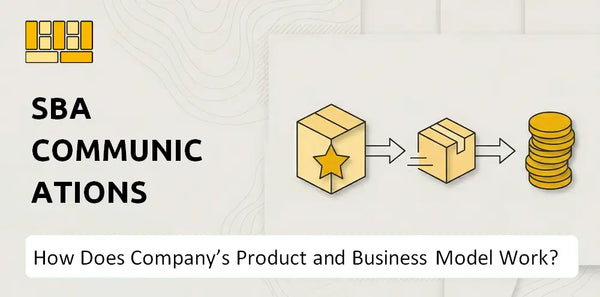
SBA's site rentals scale via multi-tenant co-location and structured lease escalators; recent 2025 site additions and tenant upgrades increased same-store rent per tenant, boosting predictable cash flow. See SBA Communications Business Model Canvas
WWhat Does SBA Communications Offer Customers?
SBA Communications sells leased space on wireless communications towers and related site development services, enabling carriers to mount antennas and base stations for broad signal coverage and faster network rollout.
 Main Tower Leasing and Site Development Offering
SBA Communications product offering centers on leasing rooftop and ground tower space across a portfolio of approximately 39,500 towers spanning the United States, South America, and Africa. The company pairs physical tower leases with Site Development Services that handle zoning, permitting, construction, and project management for carriers deploying new spectrum such as mid-band 5G.
Primary Users: Wireless Carriers and Network Operators
Major national and regional wireless carriers, mobile virtual network operators (MVNOs), and neutral-host providers use SBA towers and collocation space to expand coverage and densify networks. Enterprises and government agencies occasionally lease sites for private networks and critical communications.
Customer Value: Faster Deployments and Reduced CapEx
Carriers gain ready-made vertical real estate, power access, and structural capacity that cuts site deployment time and capital expense. SBA's managed permitting and build-to-suit capabilities reduce regulatory friction, enabling faster mid-band 5G rollouts and site densification.
Market Importance: Critical Network Backbone
As a wireless infrastructure company model, SBA Communications supports the industry shift to 5G and edge services by providing the physical layer carriers need to scale. Tower leasing and site rental form recurring, contract-backed revenue streams-SBA reported wireless site rental growth supporting its 2025 results-and Site Development Services monetize densification demand.
Customer Acquisition of SBA Communications Company
SBA Communications SWOT Analysis
- Complete SWOT Breakdown
- Fully Customizable
- Editable in Excel & Word
- Professional Formatting
- Investor-Ready Format

HHow Does SBA Communications's Product or Service Reach Users?
SBA Communications business model delivers wireless infrastructure as a direct B2B service: carriers lease vertical space on towers under master lease agreements, while SBA manages land rights, engineering, construction, and ongoing site operations to turn sites into live, revenue – generating assets.

Operating flow: tower to tenant
Carriers request capacity, agree commercial terms under master lease agreements, and are provisioned physical rack or rad center space; SBA handles engineering, permitting, civil works, and ongoing site maintenance so carriers can deploy radios and antennas.
Product delivery: physical infrastructure as a service
Delivery is a physical, technical handoff: SBA supplies the pole/tower, ground compound, power and fiber (when present), and secure mounting locations; carriers install equipment under defined weight and wind – load limits.
Production and site development
For greenfield sites SBA acts as turnkey builder-site selection, zoning, permits, foundation, tower erection and utility hookups-then commissions the site so it transmits; in 2025 SBA owned about 70 percent of U.S. tower land parcels beneath its sites, reducing site – control friction.
Channels and distribution
Channels are direct B2B sales and account teams that negotiate master lease and collocation agreements with mobile network operators, private wireless users, and tower tenants; additional access via build – to – suit contracts and managed small cell/DAS rollouts.
Key assets and partnerships
Core assets: towers, ground leases/owned land, fiber and power rights, and engineering teams; partnerships include carriers, utilities, municipalities, and construction contractors that enable fast deployment and recurring tower leasing revenue.
What keeps it running day to day
Operational continuity rests on site engineering oversight (to manage wind/load/capacity), master lease administration, routine maintenance crews, and a sales pipeline that converts capacity into long – term tenancy; strong site control-owning land under towers-lowers displacement risk.
For a detailed corporate perspective read the Brand Story of SBA Communications Company Brand Story of SBA Communications Company
SBA Communications VRIO Analysis
- Complete VRIO Analysis
- No Research Needed – Save Hours of Work
- Built by Experts, Trusted by Consultants
- Instant Download, Ready to Use
- 100% Editable, Fully Customizable

HHow Does SBA Communications Earn Money from Usage?
Revenue flows primarily from long-term site leasing to wireless carriers and tower tenants; demand for capacity upgrades and new 5G equipment converts into recurring rent, amendment fees, and modest one-time installation charges.
Site Leasing: Core Recurring Revenue
Site leasing generates the bulk of cash flow through long-term contracts with carriers for rooftop and tower space, making up over 90 percent of EBITDA in typical years. These leases deliver high-margin, predictable revenue and strong operating leverage as carriers expand networks.
Amendments, Collocation, and Build-to-Suit
Incremental amendment revenue from adding 5G radios to existing sites and collocation fees are key secondary streams; build-to-suit projects and one-time installation charges supplement recurring rent while requiring capital investment.
Pricing and Escalators
Contracts typically run 5-10 years with fixed annual escalators in the U.S. (about 3 percent on average) and inflation-linked adjustments in countries like Brazil; amendment fees are negotiated per hardware add-on or carrier-specific terms.
High-Margin Incremental Adds Drive Profit
Because the marginal cost of accommodating another tenant on an existing site is very low, site-level operating margins often exceed 80 percent, so amendment-led 5G expansions translate almost directly into EBITDA growth.
In 2025, amendment revenue materially influenced financials as carriers accelerated 5G rollouts; site leasing remained the dominant cash generator, supporting a repeatable, high-margin wireless infrastructure company model and making SBA Communications business model attractive for investors seeking stable, recurring income. Read more on company principles in Mission, Vision, and Values of SBA Communications Company
SBA Communications Marketing Mix
- Complete Marketing Mix Analysis
- Effortlessly Communicate Your Business Strategy
- Investor-Ready Format
- 100% Editable and Customizable
- Clear and Structured Layout

WWhat Makes Customers Stay with SBA Communications's Model?
SBA Communications business model is sustainable due to scarce tower assets and high switching costs, but it depends on regulatory barriers and carrier capital commitments, exposing it to competition from small cells and fiber densification.

Why SBA Communications' Model Retains Customers
Carriers stay because moving or duplicating tower-backed coverage is costly and risky; regulatory limits and site scarcity deepen the moat, while 5G and edge integration lock equipment into SBA Communications' ecosystem.
- Extreme switching costs: relocating macro site equipment commonly exceeds tens of thousands to hundreds of thousands of dollars per site and risks coverage gaps
- Regulatory dependency: zoning, permitting, and environmental reviews create high barriers to new competing towers in dense markets
- Technical stickiness: collocation, build-to-suit, small cell and edge computing integrations increase operational dependence
- Resilience: model looks resilient given mission-critical sites and historically low churn, but exposed to densification and fiber-led alternatives
SBA Communications retains tenants through constrained supply of tower assets, multi-decade lease structures, and integrated services that increase the cost and risk of switching for carriers.
Retention mechanics
- Site leasing agreements for carriers typically run 10-20 years with automatic escalators; long-term contracts reduce churn and stabilize cash flows
- Historically low tenant turnover: carrier churn rates for tower portfolios remain below 2 percent annually for most years through 2025
- Lease economics: recurring site rents are predictable; SBA Communications reported that tower leasing and site rental contributed a majority of its recurring revenue in 2025
- Make-ready and collocation: carriers add radios and spectrum equipment to existing sites rather than build new ones to avoid deployment delays and extra capital expenditure
Structural advantages and scarcity
- Tower asset scarcity: urban and suburban zones have limited available parcel sites; this scarcity supports premium rent pricing
- Regulatory moat: local zoning boards and FAA/FAA-like restrictions (for tall structures near airports) slow competing builds
- Site maintenance and operations: SBA Communications' nationwide maintenance network reduces downtime and supports carrier SLAs
Technology-driven stickiness
- 5G densification: macro sites combined with small cell and DAS (distributed antenna systems) increase multi-layer dependency and complexity of network reconfiguration
- Edge computing and fiber: integration of edge nodes and fiber backhaul into tower sites ties carrier traffic routing and services to physical locations
- Build-to-suit services: customized shelters, power, and fiber extensions create one-off investments that carriers prefer not to replicate elsewhere
Economic and financial signals (2025)
- SBA Communications' tower leasing explained: recurring rental revenue comprised the bulk of 2025 adjusted EBITDA, supporting predictable free cash flow
- Revenue streams and services in 2025 included site rental, collocation fees, build-to-suit projects, small cell/DAS deployments, and fiber/edge services
- Capital intensity: incremental build-to-suit spend is typically recovered via long-term contractual rent; churn-driven vacancy rates remained low in 2025, under 2 percent
Customer lock-in and practical barriers to exit
- Operational risk: carriers avoid simultaneous site moves because temporary coverage loss harms subscriber experience and churn
- Cost to replicate coverage: building a new nearby tower requires land acquisition, permitting, and construction often taking 12-36 months and significant capex
- Contractual terms: right-of-first-refusal, co-location clauses, and escalators favor incumbent lessors and raise costs for challengers
Competitive pressures and limits
- Small cells and neutral-host indoor DAS can erode some macro demand in dense urban pockets, especially where fiber is abundant
- Fiber and edge economics: if fiber deployment and edge compute become vastly cheaper, some applications may bypass macro sites for latency-sensitive workloads
- Regulatory changes: loosening permit rules or new spectrum sharing policies could reduce barriers to new entrants
Actionable takeaways for investors and carriers
- Investing in SBA Communications business model: evaluate lease duration, escalation clauses, and build-to-suit backlog to gauge revenue resilience
- For carriers: prefer collocation and edge partnerships to reduce capex and speed 5G rollouts
- Monitor: small cell deployment rates, municipal permitting trends, and fiber economics as signals of future exposure
Further reading
SBA Communications Ansoff Matrix
- Complete ANSOFF Matrix
- Structured for Consultants, Students, and Founders
- 100% Editable in Microsoft Word & Excel
- Instant Digital Download – Use Immediately
- Compatible with Mac & PC – Fully Unlocked

Related Blogs
- What Do the Mission, Vision, and Values of SBA Communications Company Say About Its Brand?
- How Did SBA Communications Company Become the Brand It Is Today?
- Who Runs SBA Communications Company and Shapes Its Direction?
- How Does SBA Communications Company Attract, Convert, and Keep Customers?
- How Can SBA Communications Company Grow Through Products and Customers?
- Who Are the Core Customers of SBA Communications Company?
- Why Do Customers Choose SBA Communications Company Over Competitors?
Frequently Asked Questions
SBA Communications sells leased space on wireless communications towers and related site development services. Carriers use that space to mount antennas and base stations, helping them expand coverage and roll out networks faster. The company's model centers on physical infrastructure that supports recurring tower leasing revenue.
Disclaimer
All information, articles, and product details provided on this website are for general informational and educational purposes only. We do not claim any ownership over, nor do we intend to infringe upon, any trademarks, copyrights, logos, brand names, or other intellectual property mentioned or depicted on this site. Such intellectual property remains the property of its respective owners, and any references here are made solely for identification or informational purposes, without implying any affiliation, endorsement, or partnership.
We make no representations or warranties, express or implied, regarding the accuracy, completeness, or suitability of any content or products presented. Nothing on this website should be construed as legal, tax, investment, financial, medical, or other professional advice. In addition, no part of this site - including articles or product references - constitutes a solicitation, recommendation, endorsement, advertisement, or offer to buy or sell any securities, franchises, or other financial instruments, particularly in jurisdictions where such activity would be unlawful.
All content is of a general nature and may not address the specific circumstances of any individual or entity. It is not a substitute for professional advice or services. Any actions you take based on the information provided here are strictly at your own risk. You accept full responsibility for any decisions or outcomes arising from your use of this website and agree to release us from any liability in connection with your use of, or reliance upon, the content or products found herein.