
How does STRATEC SE deliver automated analyzer systems and capture revenue as an OEM partner?
STRATEC SE designs and manufactures automated analyzers and embedded software for diagnostics firms, selling through long-term OEM contracts and service agreements. Its high-engineering moat supports recurring revenues; in 2025 order intake showed continued demand amid lab automation trends.
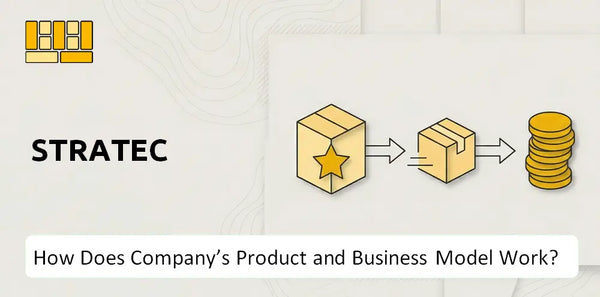
STRATEC's revenue hinges on module sales, customization fees, and lifecycle service contracts; close integration with customers raises switching costs and supports margin stability. See the STRATEC Business Model Canvas for a structured view.
WWhat Does STRATEC Offer Customers?
STRATEC SE sells fully automated in vitro diagnostics automation systems, laboratory software (middleware), and smart plastic consumables engineered for clinical chemistry, molecular diagnostics, and immunoassays, delivering integrated OEM diagnostic systems that raise throughput and reduce contamination risk.
 Main offering: modular automated analyzer platforms
STRATEC products center on modular analyzer modules and instrument platforms that OEM partners customize for unique assays, providing precision, high throughput, and scalable automation for blood and tissue testing.
Who uses it: diagnostic manufacturers and clinical labs
OEM diagnostic system makers, contract manufacturers, and large clinical laboratories rely on STRATEC company engineering and laboratory automation solutions to integrate assay chemistry into ready-to-deploy instruments.
Value to customers: speed, reliability, and data integration
Customers get contamination-free testing via smart consumables, middleware that ties instruments into lab information systems, and analyzer modules that cut sample-to-result time while ensuring reproducible performance.
Why it matters: commercial and technical differentiation
STRATEC business model blends instrument sales, recurring consumables, and software licenses-driving recurring revenue; as of FY2025 the company reported €317.9 million in revenue and ~€42 million EBIT (source: FY2025 results), reflecting demand for laboratory automation solutions.
How the products work: hardware, consumables, and software stack
STRATEC analyzer modules contain fluidics, optics, and robotics; smart plastic cartridges and sample containers include encoded identifiers and fluid pathways designed to prevent cross-contamination; middleware handles instrument control, assay workflows, and results transfer to LIS and EMR systems.
Commercial model: OEM partnerships and recurring consumables
STRATEC OEM partnerships offer instrument development and contract manufacturing for diagnostic companies; the revenue mix combines one-time instrument project income with higher-margin recurring consumables and software service fees-this mix supports R&D and steady aftermarket cash flow.
Integration and customization: project-based engineering services
Customers commission STRATEC instrument development teams to create tailored analyzer modules and integrate specific assay chemistries; projects typically span mechanical design, firmware, software integration, and regulatory support for CE/IVD submissions.
Buying and support: lifecycle and aftermarket
How to buy STRATEC diagnostic systems: through direct OEM contracts or licensing agreements; ongoing support covers software updates, consumables supply, and field service-ensuring uptime for high-volume clinical labs.
For background on company origins and strategic focus see Brand Story of STRATEC Company
STRATEC SWOT Analysis
- Complete SWOT Breakdown
- Fully Customizable
- Editable in Excel & Word
- Professional Formatting
- Investor-Ready Format

HHow Does STRATEC's Product or Service Reach Users?
STRATEC products reach users via a strict B2B OEM route: collaborative development with diagnostic partners, serial manufacturing, and white – labeled delivery to partners who place systems in hospitals and labs using their global sales networks.

Operating flow: collaborative OEM development to fielded systems
STRATEC company begins with multi – year co – development projects with major diagnostics firms, aligns engineering and regulatory work, then transitions validated systems into serial production for delivery to partners.
Product delivery: white – labeled handoff to partner sales forces
STRATEC products are shipped as finished or white – labeled analyzers and modules; partners use their own distribution and clinical sales teams to install machines in hospitals, private laboratories, and research institutes across >100 countries.
Production and development: integrated engineering and manufacturing
STRATEC handles instrument design, software, regulatory documentation, serial manufacturing, and logistics from its production sites, supporting sample – to – result in vitro diagnostics automation.
Channels and distribution: partner networks, not direct clinical sales
The company relies on OEM diagnostic systems partners for global reach; partners' direct sales, service teams, and distributors place STRATEC analyzer modules and laboratory automation solutions into end – user sites.
Key assets and partnerships: IP, manufacturing, and blue – chip customers
Key assets include proprietary instrument platforms, software solutions, and regulated manufacturing lines; strategic OEM partnerships drive recurring revenue and scale without a direct clinical sales force-supporting STRATEC business model economics.
What keeps it running day to day: program management and regulatory sync
Dedicated program teams coordinate engineering, supplier sourcing, quality, and regulatory affairs; frequent milestones ensure on – time transfers to serial manufacturing and steady OEM deliveries that sustain annual revenues tied to module shipments and service contracts.
For context on corporate strategy and partner engagement see Mission, Vision, and Values of STRATEC Company
STRATEC VRIO Analysis
- Complete VRIO Analysis
- No Research Needed – Save Hours of Work
- Built by Experts, Trusted by Consultants
- Instant Download, Ready to Use
- 100% Editable, Fully Customizable

HHow Does STRATEC Earn Money from Usage?
Revenue flows from upfront sales of analyzer units and project development fees, then converts into recurring income as installed machines consume proprietary disposables, services, and software updates; demand for tests drives continuous consumable and service revenue.
Main revenue: consumables and disposables
The primary source is recurring sales of proprietary consumables that each STRATEC product requires for every diagnostic run; in 2025 consumables and services composed roughly ~55% of total sales, making the razor-and-blade model the key profit driver.
Additional revenue: instruments, services, and licensing
Upfront analyzer unit sales, project-based development fees for OEM diagnostic systems, and long-term service contracts generate initial and supplemental income; STRATEC SE also earns from spare parts, software updates, and contract manufacturing for diagnostic companies.
Pricing and monetization logic
STRATEC business model monetizes via unit sale margins plus recurring per-test pricing embedded in consumables and optional service tiers; typical contracts bundle analyzers with multi-year consumable forecasts and service-level agreements to lock in predictable revenue.
Strongest revenue driver: installed base growth
As global installed base grows, consumable throughput scales predictably-STRATEC products convert installed analyzers into long-tail margin-rich revenue; management targeted expanding consumables share in 2026 to increase recurring revenue and gross margins.
STRATEC company reported that in 2025 recurring revenue streams (consumables, services, software) accounted for a majority of sales, with consumables growth outpacing instrument sales; investors tracking STRATEC products should focus on installed base trends, consumables run-rate per analyzer, and OEM diagnostic systems pipeline. Read a customer-centric view here: Why Customers Choose STRATEC Company
STRATEC Marketing Mix
- Complete Marketing Mix Analysis
- Effortlessly Communicate Your Business Strategy
- Investor-Ready Format
- 100% Editable and Customizable
- Clear and Structured Layout

WWhat Makes Customers Stay with STRATEC's Model?
STRATEC company's model is sustainable due to high regulatory and technical barriers that create long-lived customer lock-in, but it depends on partners continuing to certify assays and on STRATEC keeping pace with complex molecular diagnostics. Main strengths are durable switching costs and integrated software; risks include regulatory shifts and disruptive platform entrants.

Customer Retention Drivers: Why Partners Stay with STRATEC products
Customers stay because revalidating assays and replacing analyzers costs millions and takes years, while close software and assay coupling makes STRATEC SE systems a non-discretionary part of lab workflows.
- Extreme switching costs from regulatory revalidation and capital outlays for new OEM diagnostic systems
- Dependence on sustained regulatory regimes (FDA, IVDR) - a fragile point if rules change
- Deep software integration and proprietary automation workflows that lock assay, hardware, and data systems together
- Overall resilient model but exposed to platform-level disruption or major regulatory reform
Regulatory lock-in: validation for in vitro diagnostics automation typically spans 10 to 15 years per instrument generation; replacing validated STRATEC analyzers can require multi-million dollar investments and 2-5+ years of reapproval work. Software lock-in: partners embed STRATEC software solutions for lab automation into LIMS and proprietary pipelines, raising technical switching costs and recurring service revenue.
2025-2026 context: molecular diagnostics complexity increased coupling of chemistry and instrument; in 2025 independent studies and market reports show rising adoption of OEM diagnostic systems where bundled analyzer-plus-assay contracts account for an expanding share of kit revenues, sustaining STRATEC revenue model and pricing strategy. Customer churn is low; typical OEM partner relationships yield recurring instrument service, upgrade, and consumables-linked income over product lifecycles.
Key numbers and commercial mechanics: assay qualification and regulatory filing costs for a single high-complexity test commonly exceed €1-3 million, while replacing a validated platform including staff retraining and workflow changes can surpass €5-15 million for mid-size diagnostics partners. Lifecycle margins: long-term service and upgrade contracts often represent 20-35% of platform-related earnings after initial sale.
Strategic implications for investors: STRATEC business model explained for investors centers on durable OEM partnerships and contract manufacturing for diagnostic companies; revenue is driven by instrument sales, recurring service, and tight coupling to partners' reagent sales. See a related case study here: Customer Profile of STRATEC Company
STRATEC Ansoff Matrix
- Complete ANSOFF Matrix
- Structured for Consultants, Students, and Founders
- 100% Editable in Microsoft Word & Excel
- Instant Digital Download – Use Immediately
- Compatible with Mac & PC – Fully Unlocked

Related Blogs
- What Do the Mission, Vision, and Values of STRATEC Company Say About Its Brand?
- How Did STRATEC Company Become the Brand It Is Today?
- Who Runs STRATEC Company and Shapes Its Direction?
- How Does STRATEC Company Attract, Convert, and Keep Customers?
- How Can STRATEC Company Grow Through Products and Customers?
- Who Are the Core Customers of STRATEC Company?
- Why Do Customers Choose STRATEC Company Over Competitors?
Frequently Asked Questions
STRATEC offers fully automated in vitro diagnostics automation systems, laboratory middleware, and smart plastic consumables. Its products are built for clinical chemistry, molecular diagnostics, and immunoassays, with a focus on integrated OEM systems that improve throughput and reduce contamination risk.
Disclaimer
All information, articles, and product details provided on this website are for general informational and educational purposes only. We do not claim any ownership over, nor do we intend to infringe upon, any trademarks, copyrights, logos, brand names, or other intellectual property mentioned or depicted on this site. Such intellectual property remains the property of its respective owners, and any references here are made solely for identification or informational purposes, without implying any affiliation, endorsement, or partnership.
We make no representations or warranties, express or implied, regarding the accuracy, completeness, or suitability of any content or products presented. Nothing on this website should be construed as legal, tax, investment, financial, medical, or other professional advice. In addition, no part of this site - including articles or product references - constitutes a solicitation, recommendation, endorsement, advertisement, or offer to buy or sell any securities, franchises, or other financial instruments, particularly in jurisdictions where such activity would be unlawful.
All content is of a general nature and may not address the specific circumstances of any individual or entity. It is not a substitute for professional advice or services. Any actions you take based on the information provided here are strictly at your own risk. You accept full responsibility for any decisions or outcomes arising from your use of this website and agree to release us from any liability in connection with your use of, or reliance upon, the content or products found herein.