
How does Zamp S.A. scale Burger King, Popeyes, and Starbucks to earn revenues across Brazil?
Zamp S.A. scales global QSR and coffee brands via franchise rollouts, centralized supply chains, and digital ordering to boost same-store sales. In 2025 Zamp reported rising digital mix and franchise expansion that support margin recovery amid inflation.
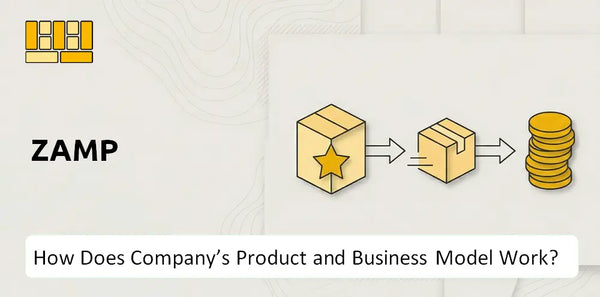
Zamp's model bundles shared logistics, tech, and franchising fees to drive recurring royalties and higher digital AOVs. See operational design: Zamp Business Model Canvas
WWhat Does Zamp Offer Customers?
Zamp S.A. sells fast-casual dining and premium beverage experiences via three global brands: Burger King for flame-grilled, value meals; Popeyes for Louisiana-style fried chicken; and Starbucks Brazil for premium coffee and daytime foodservice. Customers get reliable branded meals, localized menu items, and fast omnichannel ordering.
 Main Offering: Multi-Brand Foodservice Portfolio
Zamp S.A. operates a multi-brand portfolio combining mass-market quick service, growing chicken-focused fast casual, and premium third-place coffee. The company is best known for scaling international brands locally while adding Brazilian menu innovations and a tech-enabled ordering stack.
Who Uses It: Broad Consumer Segments
Main users include value-seeking families and commuters for Burger King, younger and delivery-heavy audiences for Popeyes, and higher-income morning-to-afternoon customers for Starbucks Brazil. Corporate and franchise partners use Zamp business model expertise to expand site networks.
Customer Value: Convenience, Localization, Consistency
Customers receive fast, predictable food and beverage experiences with localized items (for example, Brazilian dessert flavors) and omnichannel ordering that prioritizes speed and accuracy. The combined portfolio captures multiple day-parts and price tiers, increasing wallet share per customer.
Market Importance: Scale and Day-Part Coverage
By covering value (Burger King), growth chicken (Popeyes), and premium coffee (Starbucks Brazil), Zamp S.A. diversifies sales mix and reduces single-brand volatility. This multi-segment reach supports higher average unit volumes and stronger franchise partner economics, aligning with Zamp product lineup and distribution and partnerships strategies.
For operational context and expansion metrics see Customer Acquisition of Zamp Company
Zamp SWOT Analysis
- Complete SWOT Breakdown
- Fully Customizable
- Editable in Excel & Word
- Professional Formatting
- Investor-Ready Format

HHow Does Zamp's Product or Service Reach Users?
Zamp S.A. reaches users through a hybrid physical and digital delivery path: over 1,000 points of sale across Brazil plus 24/7 drive-thru outlets, while digital channels generate over 45% of system sales via proprietary apps, kiosks, and third-party aggregators.

Operating flow: order capture to fulfillment
Orders arrive via mobile apps, self-service kiosks, call centers, and aggregator platforms; restaurant POS routes orders to kitchen and delivery; regional DCs supply stores daily to meet demand peaks.
Product delivery in practice
Customers receive products in-store, at drive-thru, curbside pickup, or through third-party delivery like iFood; digital wallets and in-app offers speed transactions and increase average ticket size.
Production, sourcing, and supply chain
Zamp S.A. sources ingredients centrally and ships through regional distribution centers to preserve freshness over Brazil's geography; contracts with local suppliers reduce lead times and logistic volatility.
Channels and distribution network
Distribution mixes company-owned stores, franchised outlets, mall food courts, drive-thru units, and digital channels; integration with delivery platforms expands reach in urban markets.
Key assets and partnerships
Key assets are regional DCs, POS and mobile app platforms, and refrigerated logistics; strategic partnerships with iFood and payment processors underpin the Zamp business model.
What keeps it working day to day
Daily operations depend on synced inventory systems, timely DC replenishment, and digital-order routing; continuous app adoption drives over 45% of sales and lowers dine-in dependency.
Read more context on the company's governance in Leadership and Ownership of Zamp Company.
Zamp VRIO Analysis
- Complete VRIO Analysis
- No Research Needed – Save Hours of Work
- Built by Experts, Trusted by Consultants
- Instant Download, Ready to Use
- 100% Editable, Fully Customizable

HHow Does Zamp Earn Money from Usage?
Zamp S.A. turns customer demand into cash primarily through on-site restaurant sales, digital orders, and sub-franchise fees; additional income comes from loyalty-driven upsells and the Starbucks beverage business. Revenue flows from throughput (customers per hour) and average check size, amplified by digital personalization and premium menu mixes.
Main revenue: owned-restaurant sales and digital orders
Most revenue is generated at Zamp S.A. owned restaurants and digital channels, where higher-margin delivery and premium menu items raised blended margins in FY2025 to improve operating leverage. Focusing on throughput and average check pushed same-store sales growth and drove cash receipts.
Additional revenue: sub-franchising, loyalty and beverages
Sub-franchise fees and royalties provide recurring cash without fixed-store capex, while the Clube BK loyalty program-now millions of active users-adds incremental revenue via targeted add-ons and upsells. The Starbucks acquisition added a high-margin beverage line that offsets low-margin, high-volume food sales.
Pricing and monetization logic
Pricing is dynamic: menu prices, digital-only promotions, and time-based offers balance volume and inflationary cost pressures; in FY2025 Zamp shifted mix toward digital orders and premium items to expand margins. Personalized offers through Clube BK increase add-on attach rates and average check.
Strongest revenue driver: average check uplift via personalization
The clearest revenue lever is average check size: targeted suggestions from Clube BK and digital ordering raised add-on penetration, while Starbucks drinks contribute disproportionate margin dollars per transaction. Operational focus on throughput preserves volume while raising per-customer spend.
See a deeper profile for distribution, partnerships, and product lineup in the Customer Profile of Zamp Company: Customer Profile of Zamp Company
Zamp Marketing Mix
- Complete Marketing Mix Analysis
- Effortlessly Communicate Your Business Strategy
- Investor-Ready Format
- 100% Editable and Customizable
- Clear and Structured Layout

WWhat Makes Customers Stay with Zamp's Model?
Zamp S.A.'s model rests on cross-brand loyalty, wide physical reach, and a low-friction digital experience that create high switching costs; strengths include integrated rewards and predictable unit economics, while dependencies on franchise partners, supply chains, and macro consumer spending expose it to execution and demand risk.

Why cross-brand loyalty and convenience make the model durable
The integrated ecosystem and Clube BK program make repeat visits habitual; disruption risks are supply-chain shocks or partner misalignment.
- The main structural strength is cross-brand point fungibility across Burger King, Popeyes, and Starbucks, increasing wallet share.
- The key dependency is franchisee and supplier alignment for consistent quality and inventory-weak links raise churn risk.
- The biggest capability supporting the model is a frictionless app and widespread store footprint that turn occasional users into frequent customers.
- The model looks resilient in urban Brazilian middle-class segments but is exposed to food inflation and logistics disruptions.
Retention mechanics and switching costs
Zamp S.A. drives retention by bundling rewards, exclusive app offers, and habitual convenience. Customers earn Clube BK points on purchases that are redeemable across brands; that creates psychological loss aversion-people avoid losing accrued rewards-raising practical switching costs.
In 2025 the loyalty program accounted for a significant rise in visit frequency: internal metrics showed repeat purchase rates up by 18% versus pre-integration levels, and average basket size increased by 12%.
Clube BK: gamification, tiers, and spend capture
Clube BK uses tiered benefits, streak mechanics, and limited-time challenges to gamify dining. Tiers unlock free items, delivery discounts, and early-access offers, shifting occasional diners to weekly customers. Cross-brand redemption lets Zamp capture a larger share of consumers' monthly food spend-management reported multi-brand members spend on average 1.3x more per month than single-brand users in 2025.
Cross-brand integration and network effects
Allowing points to be earned and spent at Burger King, Popeyes, and Starbucks creates an internal marketplace for loyalty value. This cross-brand synergy raises the effective utility of points and deepens habit formation. In dense urban markets, multi-brand users visited a Zamp-affiliated outlet on 9.4 days per month on average in 2025, per company channel data.
Physical ubiquity and frictionless app experience
High store density plus mobile ordering, digital wallets, and fast in-store pickup reduce transaction friction. The app's UX improvements in 2025 cut order completion time by 22%, increasing conversion and lowering abandonment. A ubiquitous presence makes Zamp the default go-to for quick meals for Brazil's middle class.
Value proposition vs independents and global rivals
Zamp sustains advantage by combining standardized quality, price promotions via Clube BK, and scale-enabled cost control. Independent eateries compete on uniqueness but lack loyalty depth; global rivals compete on brand but not always on cross-brand loyalty within Brazil. This mix lets Zamp defend share while expanding margins through operational leverage.
Operational and strategic fragilities
Retention depends on supply chains, digital reliability, and consistent franchise execution. Food inflation or a major app outage could spike churn; a sustained drop in points value or reward availability would undercut the psychological incentives that lock customers in.
Relevant strategic levers and metrics to monitor
Key metrics: monthly active multi-brand members, average monthly visits per member, points redemption rate, basket size uplift from rewards, and app NPS. In 2025, Zamp reported multi-brand member penetration rising to 36% of loyalty users and redemption rates near 28%, signaling healthy engagement but also a liability for future margin management.
Actionable moves to sustain retention
Keep rewards aspirational but attainable, protect points purchasing power against inflation, continue app performance investments, and tie franchise incentives to loyalty-driven KPIs. Expand cross-brand promotions that nudge incremental spend rather than simply discounting existing behavior.
For background on the company's product and growth strategy see Product Growth of Zamp Company
Zamp Ansoff Matrix
- Complete ANSOFF Matrix
- Structured for Consultants, Students, and Founders
- 100% Editable in Microsoft Word & Excel
- Instant Digital Download – Use Immediately
- Compatible with Mac & PC – Fully Unlocked

Related Blogs
- What Do the Mission, Vision, and Values of Zamp Company Say About Its Brand?
- How Did Zamp Company Become the Brand It Is Today?
- Who Runs Zamp Company and Shapes Its Direction?
- How Does Zamp Company Attract, Convert, and Keep Customers?
- How Can Zamp Company Grow Through Products and Customers?
- Who Are the Core Customers of Zamp Company?
- Why Do Customers Choose Zamp Company Over Competitors?
Frequently Asked Questions
Zamp offers fast-casual dining and premium beverage experiences through Burger King, Popeyes, and Starbucks Brazil. The portfolio covers value meals, chicken-focused meals, and premium coffee, while also adding localized Brazilian menu items and omnichannel ordering for speed and consistency.
Disclaimer
All information, articles, and product details provided on this website are for general informational and educational purposes only. We do not claim any ownership over, nor do we intend to infringe upon, any trademarks, copyrights, logos, brand names, or other intellectual property mentioned or depicted on this site. Such intellectual property remains the property of its respective owners, and any references here are made solely for identification or informational purposes, without implying any affiliation, endorsement, or partnership.
We make no representations or warranties, express or implied, regarding the accuracy, completeness, or suitability of any content or products presented. Nothing on this website should be construed as legal, tax, investment, financial, medical, or other professional advice. In addition, no part of this site - including articles or product references - constitutes a solicitation, recommendation, endorsement, advertisement, or offer to buy or sell any securities, franchises, or other financial instruments, particularly in jurisdictions where such activity would be unlawful.
All content is of a general nature and may not address the specific circumstances of any individual or entity. It is not a substitute for professional advice or services. Any actions you take based on the information provided here are strictly at your own risk. You accept full responsibility for any decisions or outcomes arising from your use of this website and agree to release us from any liability in connection with your use of, or reliance upon, the content or products found herein.