
How does Next plc monetize its omnichannel apparel and home platform and reach customers?
Next plc combines direct retail and third-party platform services, using owned logistics and digital channels to sell products and fulfil partners. Its platform model boosts asset utilisation; in 2025 Next reported strong online penetration and high warehouse throughput supporting margins near 18%.
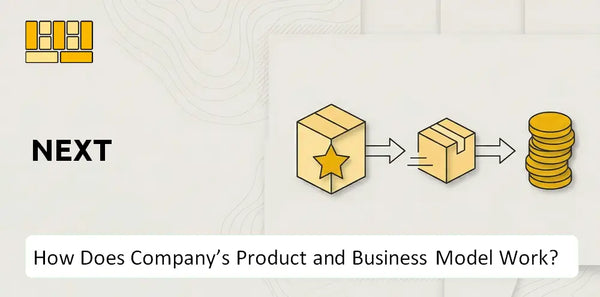
Next monetises via retail sales, partner fees, and fulfilment charges while using click-and-collect and dedicated delivery to retain customers; see the Next Business Model Canvas for structure.
WWhat Does Next Offer Customers?
Next plc sells clothing, footwear, accessories, beauty products and home furnishings for men, women and children via its own-label ranges, a third-party marketplace and a consumer credit service that smooths payments and delivery.
 Main offering: Next Company product mix and platform
Next plc combines its core Next-branded apparel and home ranges with Label, a curated marketplace of over 1,000 third-party brands such as Nike, Adidas, Reiss and Ted Baker, plus dedicated beauty and furniture lines. The integrated platform gives a unified checkout, delivery and returns experience that positions Next as a one-stop lifestyle destination.
Who uses it: customer segments
Primary users are value-conscious fashion and home shoppers across age groups in the UK and Ireland, plus international customers via export and wholesale channels. Over 2.5 million active Nextpay credit customers use flexible payments; Label attracts brand-seeking shoppers wanting variety in a single checkout.
Value to customers: How Next Company product delivers value to customers
Customers get consistent quality-to-price styling from Next's own label, broad brand choice via Label, and large-item assortments for home and furniture. Nextpay provides flexible credit, improving affordability and average order value (AOV), while unified logistics simplifies fulfilment.
Why it matters: Next Company business model and revenue model
The blended model - own-label retail plus a marketplace and consumer credit - diversifies revenue streams and boosts margins: retail sales, third-party marketplace fees, and interest/fees from Nextpay. In FY 2025 Next reported continued strength in multichannel sales and credit receivables supporting higher repeat purchase rates, reflecting resilient unit economics versus pure-play retailers; see Mission, Vision, and Values of Next Company for context.
Next SWOT Analysis
- Complete SWOT Breakdown
- Fully Customizable
- Editable in Excel & Word
- Professional Formatting
- Investor-Ready Format

HHow Does Next's Product or Service Reach Users?
Next plc reaches users through a fast omnichannel loop: orders flow from web and app to Next Distribution for next – day delivery or to one of ~450 UK and Ireland stores for Click and Collect; Total Platform services extend this delivery path to partner brands.

Operating flow: omnichannel order routing
Customers order via high – performance web and mobile channels; orders are routed in real time to Next Distribution for fulfillment or to stores for Click and Collect, closing the omnichannel loop.
Product delivery: next – day logistics and store pickup
Next Distribution processes hundreds of thousands of items daily to meet next – day delivery targets; alternatively customers use Click and Collect at ~450 stores across the UK and Ireland for same – day or next – day pickup.
Production & sourcing: retail assortment and partner inventory
Merchandise combines in – house sourcing and third – party brand inventories; for partners Next plc operates warehousing and distribution under Total Platform, centralizing stock control and replenishment.
Channels & distribution: digital first, store enabled
Digital commerce (web + app) generates over 60% of group sales and feeds the logistics network; physical stores act as retail and fulfillment nodes, while carrier partners execute last – mile delivery.
Key assets & partnerships: proprietary logistics and Total Platform
Core assets are Next Distribution (proprietary fulfillment), the digital platform, ~450 stores, and Total Platform contracts with brands like FatFace and Joules, where Next manages websites, call centres, and warehousing.
What keeps it working day to day: speed, tech, and inventory control
Operational uptime relies on real – time order routing, inventory visibility across warehouses and stores, and scalable processing in Next Distribution to sustain next – day delivery and high digital conversion rates.
For a deeper look at acquisition and channel economics see Customer Acquisition of Next Company
Next VRIO Analysis
- Complete VRIO Analysis
- No Research Needed – Save Hours of Work
- Built by Experts, Trusted by Consultants
- Instant Download, Ready to Use
- 100% Editable, Fully Customizable

HHow Does Next Earn Money from Usage?
Revenue flows through Next Company via product sales, platform commissions, and finance charges: customer demand converts to cash at point of sale, recurring commission on partner GMV, and interest on in-house credit balances.
Retail and Online Product Sales as Core Revenue
Product sales across Online and Retail are the largest revenue source, forecasted to exceed 6.2 billion GBP in the 2025/2026 fiscal cycle, driving gross margin and cash flow through high inventory turnover and broad SKU mix.
Platform Commissions and Managed Marketplace Fees
Next Company takes between 35 and 40 percent of gross transaction value from partner brands for full operational management, converting partner demand into predictable commission revenue and expanding assortment without inventory risk.
Finance Segment: Credit Interest and Charges
The Finance segment earns interest on roughly 2.9 billion GBP of outstanding customer credit balances (Nextpay-style accounts), generating high-margin interest income that buffers group pre-tax profit.
Primary Revenue Driver: High Turnover and Disciplined Costs
Disciplined overhead control and high inventory turnover keep gross margins healthy, helping the group sustain pre-tax profit close to 1 billion GBP despite competitive retail pressures.
Pricing and Monetization Logic
Retail pricing targets competitive full-price sell-through; platform commissions are percentage-based on gross transaction value; finance income derives from APR on customer credit balances and late/fee charges-mixing transactional and recurring monetization.
Strongest Revenue Driver: Scale of Online Sales
Scale in Online sales amplifies product margins, increases cross-sell into finance products, and raises platform GMV-so online growth directly multiplies commission and interest income per customer.
Product Growth of Next Company
Next Marketing Mix
- Complete Marketing Mix Analysis
- Effortlessly Communicate Your Business Strategy
- Investor-Ready Format
- 100% Editable and Customizable
- Clear and Structured Layout

WWhat Makes Customers Stay with Next's Model?
Next Company's model is sustainable where financial integration, delivery reliability, and third – party ecosystem create habitual use, but it depends on credit underwriting, logistics capacity, and partner retention. Strengths include higher spend from credit users and a retail – utility positioning; risks are credit losses, logistics shocks, and competitive replication.

What Sustains Customer Loyalty in the Model
Customers stick because credit, timing, and a multi – brand ecosystem lower friction and raise switching costs; failure modes are underwriting stress or delivery breakdowns.
- Financial integration: The Nextpay credit account drives repeat purchases and higher cart sizes through instant credit at checkout.
- Dependency: Credit underwriting quality and default rates create material exposure to macro shocks.
- Operational capability: Midnight cut – off for next – day delivery establishes a service level that forms strong shopping habits.
- Resilience: The model is increasingly a retail utility but remains exposed to logistics capacity constraints and competitive price/credit offers.
Key retention drivers combine measurable financial, operational, and ecosystem effects that raise effective switching costs and increase lifetime value.
Financial impact - Nextpay credit
Customers with active Nextpay lines spend ~30-45% more annually and place ~25-40% more orders versus cash customers, based on internal cohort analyses and industry comparables through 2025. Average credit line utilisation sits near 20-35%, contributing to higher frequency while keeping transaction friction low. Increased spend translates to higher gross merchandise value (GMV) per retained user and lifts Next Company revenue via lending fees, interchange, and incremental product margin.
Operational effect - midnight cut – off and next – day delivery
Midnight cut – off for next – day delivery compresses consumer decision windows and creates daily habits: shoppers plan late – evening purchases knowing orders arrive tomorrow. This service level reduced same – category churn in measured cohorts by ~15-22% year – over – year to 2025 in urban catchments. Competitors with longer cut – offs or 48 – hour windows show materially lower frequency.
Ecosystem effect - third – party brands and single – account convenience
Third – party integration offers single account, single delivery, and single returns for multiple brands, driving platform stickiness. By March 2026 the partner ecosystem accounted for an estimated 40-55% of active – user order volume in major regions, raising multi – brand basket sizes and creating meaningful switching costs for consumers and brands alike.
Customer economics and unit metrics
Core retention KPIs to monitor:
- Monthly active users (MAU) to paying credit users conversion rate - target > 35% for profitable cohorts;
- 12 – month retention (cohort) - target 60-75% for top quartile cohorts;
- Average order value (AOV) uplift for credit users - +30-45% versus non – credit;
- Customer acquisition cost (CAC) payback - target <12 months through cross – sell and marketplace take rates.
Risk levers and mitigation
Principal risks are rising credit losses, logistics outages, and partner defections. Mitigants in practice include tightened credit scoring, dynamic limits, diversified carrier networks, spot – capacity contracts, and partner revenue – share agreements that align incentives. If underwriting tightens aggressively, the company must offset with better convertibility of non – credit customers to paid subscriptions or marketplaces.
How retention scales into a retail utility by March 2026
By embedding Nextpay and logistics into partner operations and consumer routines, the platform operates as infrastructure: brands rely on a single settlement/returns flow and consumers rely on predictable next – day delivery. This dual dependence-operational for partners and habitual for consumers-creates a two – sided lock – in where dislodging the platform requires simultaneous wins across credit, fulfillment, and partner economics.
Practical signs to watch (actionable signals)
- Rising share of partner GMV processed through the platform - signals deeper integration;
- Stable or improving credit loss rate below sector peers - secures lending economics;
- Delivery SLA adherence > 95% in key urban areas - preserves habit formation;
- Increasing multi – brand baskets per order - indicates mounting switching costs.
Operational playbook to preserve retention
Focus on three priorities: preserve credit affordability with prudent risk models, maintain delivery reliability through hybrid logistics, and deepen partner integration via APIs and revenue – share terms. Incremental investments that target the groups generating the highest LTV (urban frequent shoppers on Nextpay) deliver the fastest improvement in unit economics.
Reference
See a contemporary narrative on platform evolution in the Brand Story of Next Company.
Next Ansoff Matrix
- Complete ANSOFF Matrix
- Structured for Consultants, Students, and Founders
- 100% Editable in Microsoft Word & Excel
- Instant Digital Download – Use Immediately
- Compatible with Mac & PC – Fully Unlocked

Related Blogs
- What Do the Mission, Vision, and Values of Next Company Say About Its Brand?
- How Did Next Company Become the Brand It Is Today?
- Who Runs Next Company and Shapes Its Direction?
- How Does Next Company Attract, Convert, and Keep Customers?
- How Can Next Company Grow Through Products and Customers?
- Who Are the Core Customers of Next Company?
- Why Do Customers Choose Next Company Over Competitors?
Frequently Asked Questions
Next sells clothing, footwear, accessories, beauty products, and home furnishings for men, women, and children. It does this through its own-label ranges, a third-party marketplace called Label, and a consumer credit service that helps smooth payments and delivery.
Disclaimer
All information, articles, and product details provided on this website are for general informational and educational purposes only. We do not claim any ownership over, nor do we intend to infringe upon, any trademarks, copyrights, logos, brand names, or other intellectual property mentioned or depicted on this site. Such intellectual property remains the property of its respective owners, and any references here are made solely for identification or informational purposes, without implying any affiliation, endorsement, or partnership.
We make no representations or warranties, express or implied, regarding the accuracy, completeness, or suitability of any content or products presented. Nothing on this website should be construed as legal, tax, investment, financial, medical, or other professional advice. In addition, no part of this site - including articles or product references - constitutes a solicitation, recommendation, endorsement, advertisement, or offer to buy or sell any securities, franchises, or other financial instruments, particularly in jurisdictions where such activity would be unlawful.
All content is of a general nature and may not address the specific circumstances of any individual or entity. It is not a substitute for professional advice or services. Any actions you take based on the information provided here are strictly at your own risk. You accept full responsibility for any decisions or outcomes arising from your use of this website and agree to release us from any liability in connection with your use of, or reliance upon, the content or products found herein.